For amplified and processed quartet and loudspeaker orchestra.
Lemur opens its anniversary season with the world premiere of its latest work, Lichtbogen, in the Marble Hall at Sentralen, Friday 11 September at 8.30pm. Here, acoustic sound, live electronics and Gard Gitlestad’s lighting design are pressed into one and the same system. Cello, flute, double bass and horn meet electronic systems developed by Niklas Adam and Mike McCormick. The result crackles and simmers, building into dense masses of sound that spread through the entire room — at times intimate as a bonfire, at other times an electrical discharge on an industrial scale.
Commisioned by Ultima, in collaboration with GRM. Supported by Norsk kulturråd.
Lichtbogen is a sonic fable spun around electric arcs and fragments of Norwegian industrial history. Four soloists navigate a deliberately unstable sound universe, governed by the geometry of the room, its atmosphere, and the bodies within it. The sound is constantly moving, searching and diverging, suspended between order and collapse.
Our latest piece Lichtbogen premieres in Oslo on sept 11th. Come to Marmorsalen at Sentralen, 20.30.
MD: I think the idea of composing together is yet another component in the investigations that characterise Lemur. It might not have been an articulated aim, but in the compositional process of Critical Band we worked as usual, only we this time made all the rules beforehand rather than on stage.
HST: It’s hard to say exactly where a project starts. In a way Critical Band is an extension of Lemur’s activities. We like investigating things together and look at where improvisation can start. To investigate a room became one such starting point, looking for the idiosyncrasies that an acoustician would remove.This has always been our method, to investigate and experiment with everything we can. Register, orchestration, timbre, sounds.
BH: Considering our scores: Some people see them as a loose, poetic descriptions of the music and not an proper score. Now, on one level that’s true, but what is lost here are all the things that are defined by the rehearsal process. It’s not a coincidence what take place in the end, the material comes out of a rigorous rehearsal process. Yes, it is true that the text is open to interpretation, but the rehearsal process, our comments, the way we practice all contribute towards the composition. So, there is freedom in this form of notation, but a freedom that is governed by a kind of social control that comes from working together.
LG: I think it was a great strength that we didn’t write the score down until we had finished the rehearsals. I had actually imagined that we might have a sketch of the form ready when we met the singers for the first time. But we didn’t. We had a lot of material, a vague idea of maybe something a bit worn like this, we had a lot of lyrics, a theme song, a matrix, different entrances, we transcribed the calm song from the previous record etc. But I felt that what we achieved in this composition process was to be open to input from our own material, right up to the final phase.
Playing for the attuned ears of the audience at Mandagsklubben in Oslo tonight.
Premiering our new programme with the immaculate Kate Pendry today at Cappelens Forslag, Oslo. Fragments of Frank O´Hara and Morton Feldman combined, rearranged and recreated live.
Playing in the beautiful acoustics of Molde Domkirke with organ magician Ståle Storløkken tonight.
Lemur sounds like they are cutting up the marble with their instruments. Flute, cello, horn and double bass make the building resound like a power plant – and they drill until electronic drones form in the air.
Preparing a new program with the immaculate Kate Pendry, ready for presentation at Blå in May 2026.
Playing at Becco tonight, at Mandagsklubben
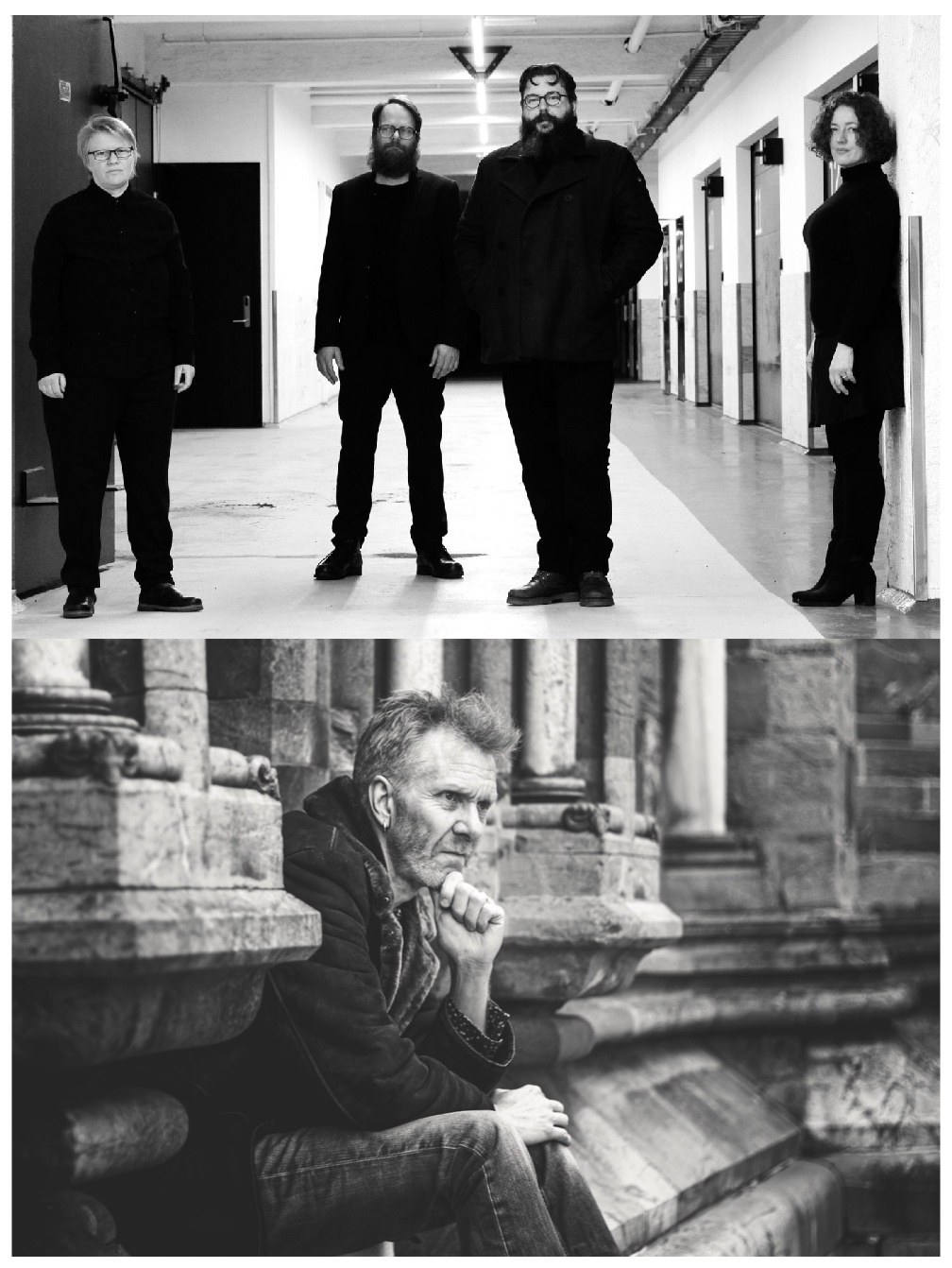
Ståle Storløkken, organ Bjørnar Habbestad, flutes Hild Sofie Tafjord, horn Lene Grenager, cello Michael Duch, bass
The collaboration between Lemur and Ståle Storløkken brings together some of the most distinctive voices in Norwegian improvisation and contemporary music, set in the frame of church acoustics. At the core of the project is a shared, radical approach to the instrument as a sounding body, and a musical practice rooted in improvisation, deep listening, and collective form-making.
Ståle Storløkken is one of Norway’s most influential sound explorers, known from projects such as Elephant9, Supersilent, and his long-standing collaboration with Terje Rypdal. His work is driven by timbre, texture, and harmonic freedom, and by a persistent curiosity for the hidden possibilities and limitations of his instruments. Whether working with Hammond organ, church organ, or electronics, Storløkken seeks out unconventional playing techniques and emergent sonic details, always attentive to the moment and the space in which the music unfolds.
Lemur and Ståle Storløkken work within a shared improvisational space defined by intensity, openness, and attentive listening. Delicate melodic material may develop into dense sonic textures; mechanical structures intersect with organic movement; lyrical or sacred sonorities meet more raw and abrasive elements.