Electronics under construction
Over the last fifteen years, LEMUR have developed bespoke electronics systems as a fifth ensemble voice alongside the quartet’s instrumentalists. Working closely with a range of programmers, music technologists and sound designers, the group’s works have called for processing and synthesis instruments, foot controllers, digital scores, network systems and spatialisation tools — each developed in close collaboration between the musicians and their technical partners, and built as an integral part of the composition it serves rather than added on top of it.
Turning instruments inside out
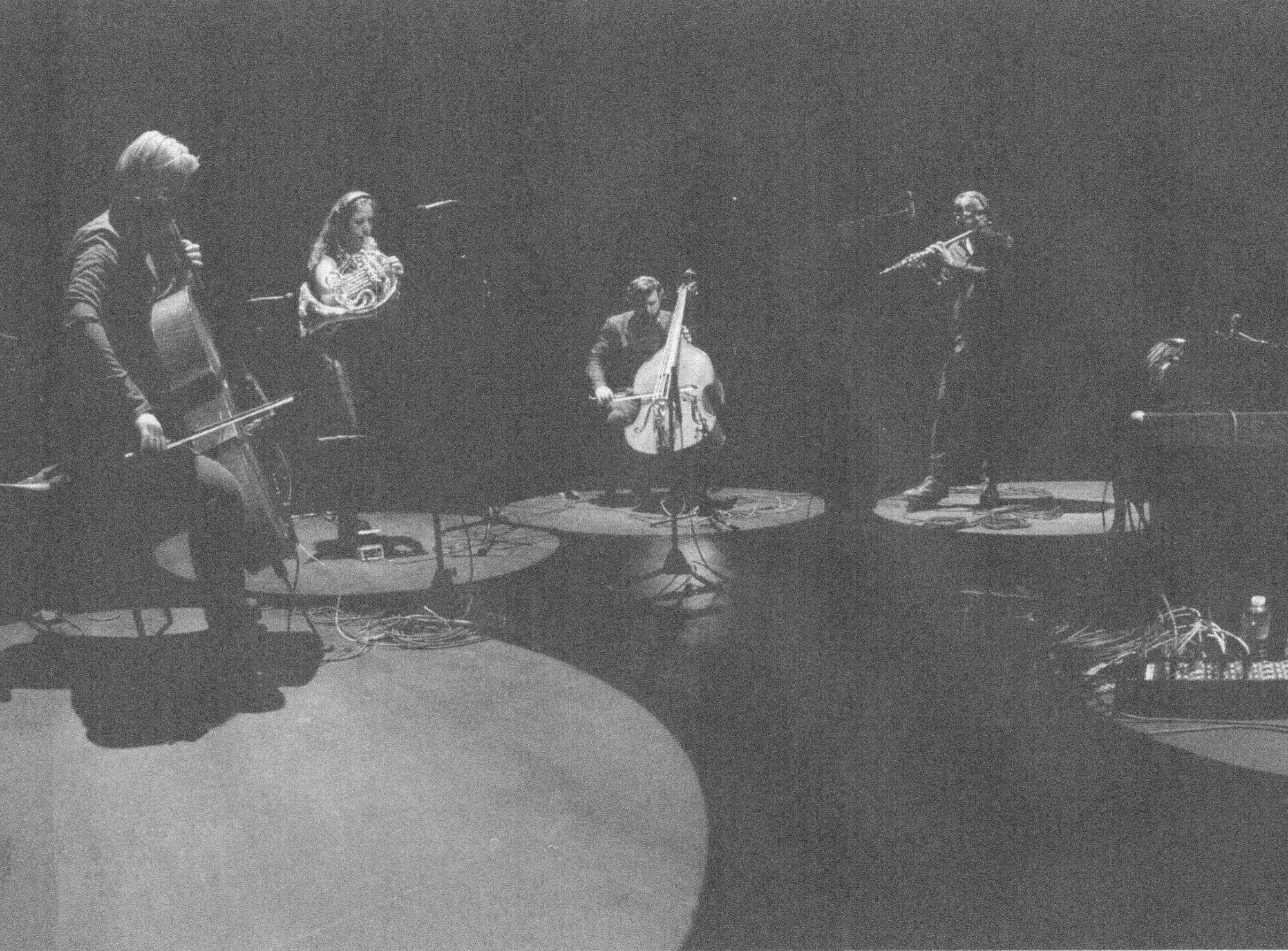
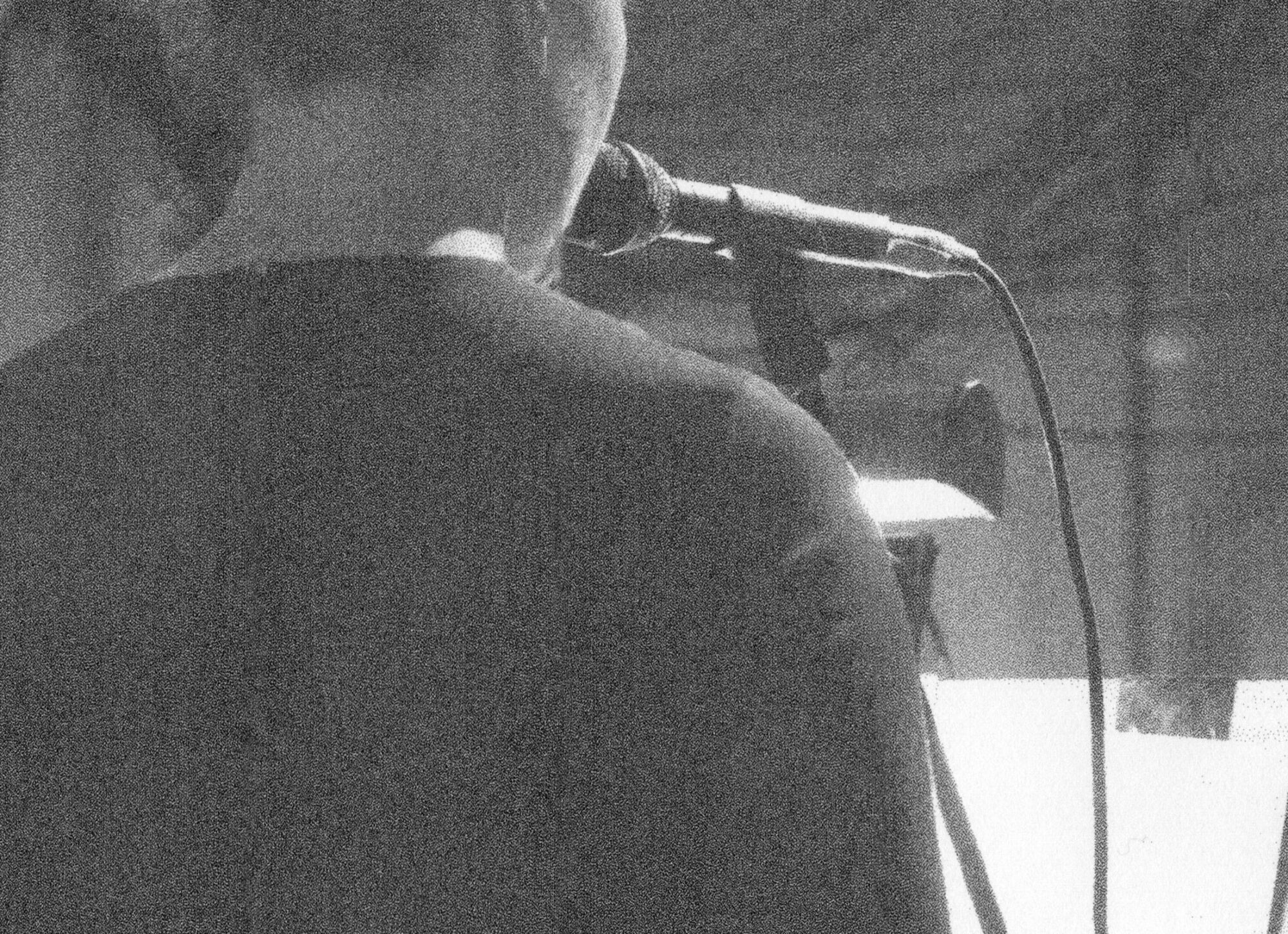
LEMUR’s electronics begin at the instruments themselves. Since Mikrophonie (2014) — made for amplified quartet and live electronics with Benjamin Maumus at GMEA, Albi — LEMUR’s practice has centred on close, or “hyper”, microphone placement: mics positioned at varying distances from each instrument’s sound-producing mechanisms capture distinct qualities and perspectives on the ensemble’s sound, including resonances, breath and mechanical noise that never normally reach an audience. This inner acoustic becomes compositional material in its own right, set against each instrument’s outer, “public” sound. Mikrophonie marked a turning point in this development: working closely with Maumus, amplification stopped being reinforcement and became instrumentation. Since then, elements of this practice have been developed further in Lemuria, Out of the Dark, Symphonie magnétophonique and Lichtbogen.
Listening scenograpy
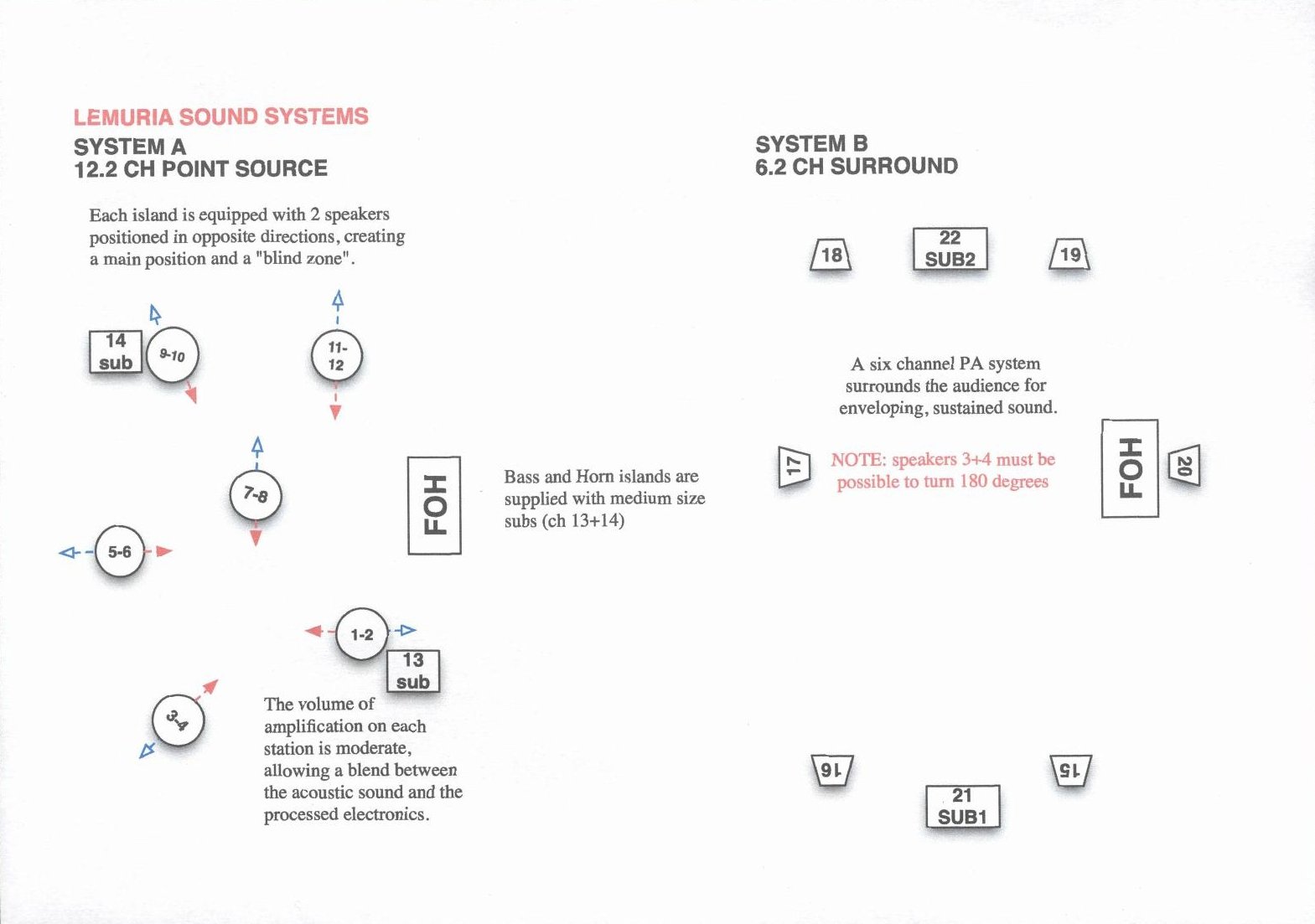
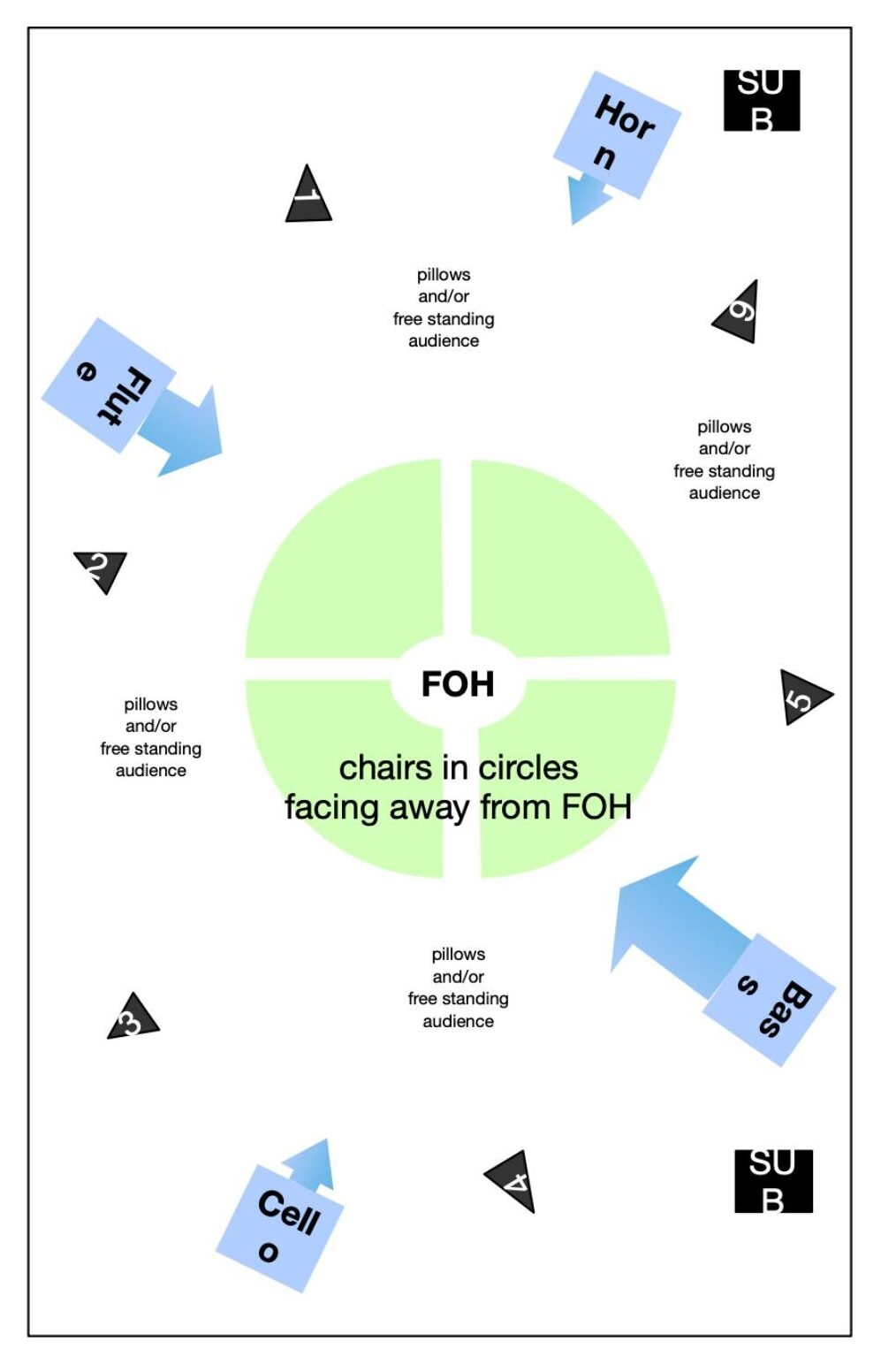
LEMUR treat the listening experience itself as a compositional parameter: placement, speakers, headphones, seating and lighting are designed as deliberately as pitch or rhythm. Mikrophonie‘s audience wears wireless headsets; Critical Bands surrounds them with players in adjacent spaces; Lemuria (2017) goes furthest, building the “island” — a spatial motif borrowed from Luigi Nono — into sound distribution, spatial plan and compositional method at once. Six performers on low podiums, spread across the room, are each wrapped in their own sound ecosystem of two sources and two close-range speakers, layered under a room-wide surround bed and spatialised by Thorolf Thuestad. With no fixed listening position, an audience free to move between islands never hears quite the same piece twice.
Thuestad returned for Out of the Dark (2019), designing a twelve-speaker floor-and-balcony ring that reworks the same island-derived thinking for a single room: the old Athens Stock Exchange.
Bespoke processing and synthesis
Underneath the speaker arrays sits a layer of custom-built processing and synthesis software, largely developed in SuperCollider by programmer Jeff Carey. For Lemuria, Carey wrote the processing instruments that drive each island’s sound ecosystem — patches built specifically for that piece’s six-performer, two-source-per-musician architecture rather than adapted from a general toolkit.
He returned to build the electronics for Out of the Dark (2019), reworking the same instrument-building approach to draw out the resonance of a single historic room. This bespoke, piece-specific approach to synthesis and processing — software written for a particular room, ensemble configuration or dramaturgy, rather than a fixed plug-in chain — is a throughline across LEMUR’s SuperCollider work. For Symphonie magnétophonique, Lemur 1924 and Lichtbogen, Carey’s work has been reassembled and expanded by Mads Kjeldgaard and Niklas Adam, later joined by Mike McCormick.
Control, cue and network systems
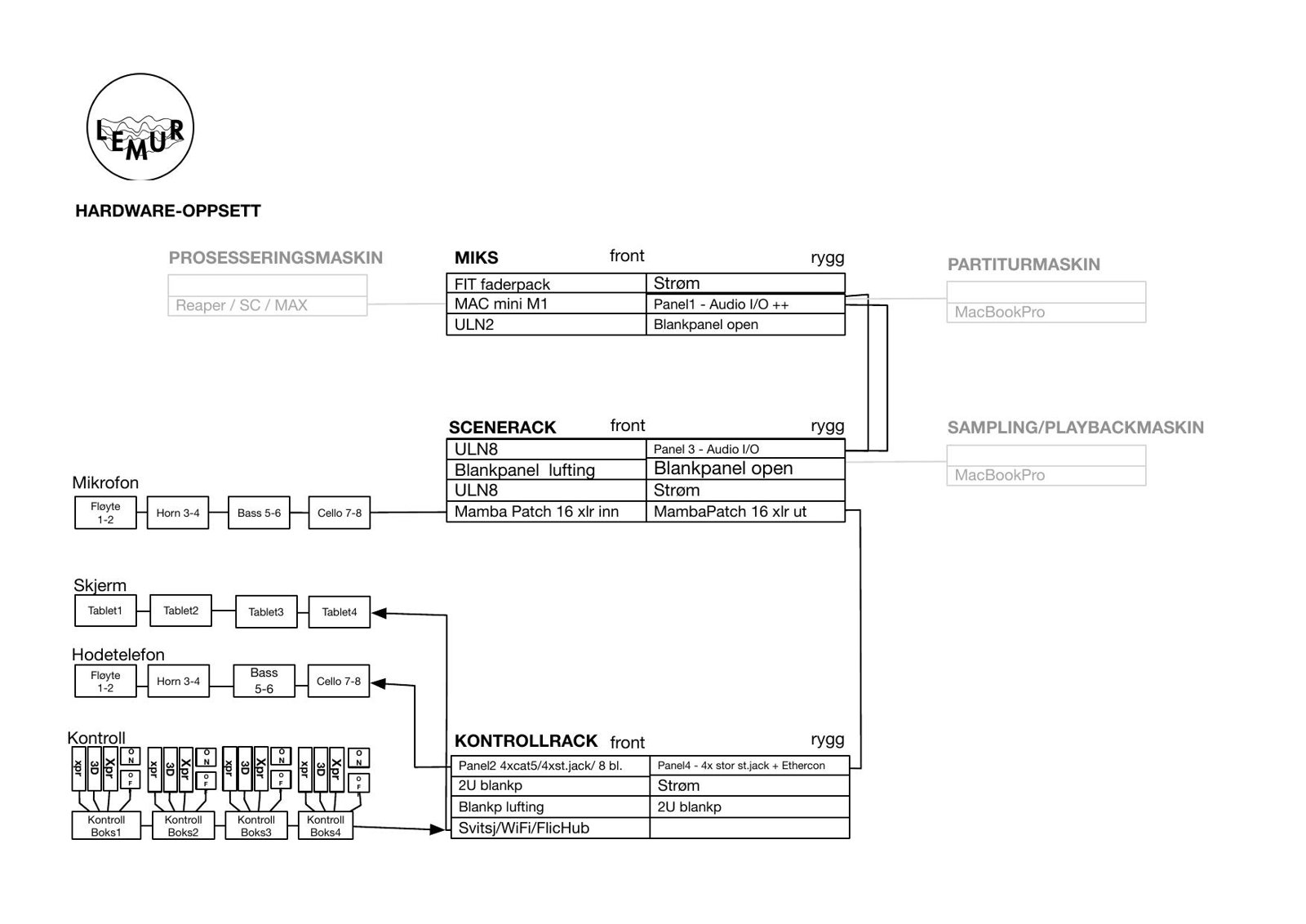
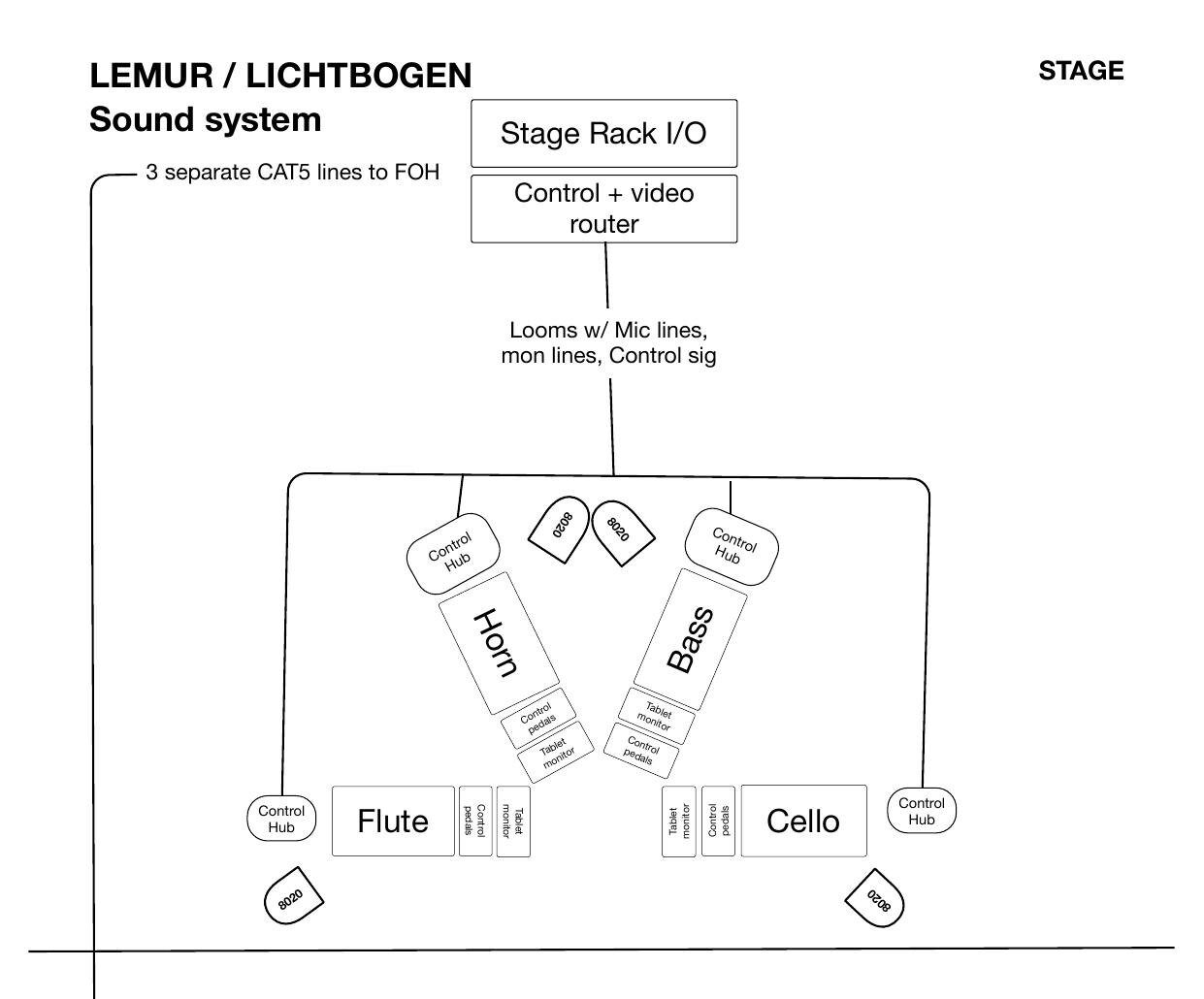
Holding the processing and spatialisation together is a layer of control infrastructure: systems that let musicians trigger, route and steer electronics live, and that keep everything synchronised. Lemuria‘s control system was developed by Thom Johansen and Mads Kjeldgaard at Notam. Networked control has gradually made it possible to place musicians at extreme distances from one another while all routing through a single computer at front of house. Lemur 1924 (2024), built with Niklas Adam and Gard Gitlestad around three experimental silent films from 1924 (René Clair’s Entr’acte, Viking Eggeling’s Diagonal Symphony, and Léger and Murphy’s Ballet mécanique), pushed this network further into video: four synced channels of film are sent over NDI to tablets at each performer’s stand, where the film plays in real time alongside text and graphical cues from the score.
Scores as systems
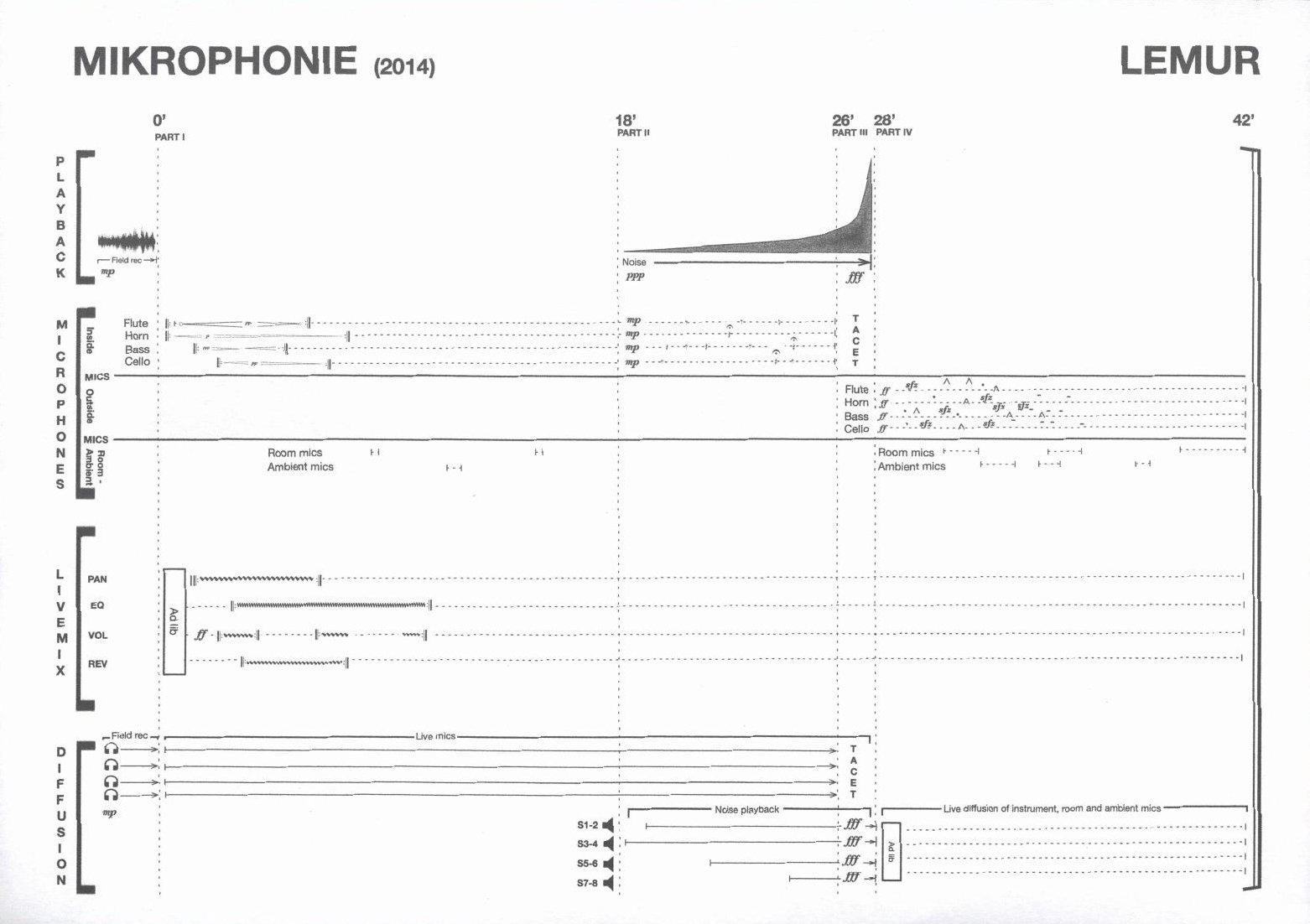
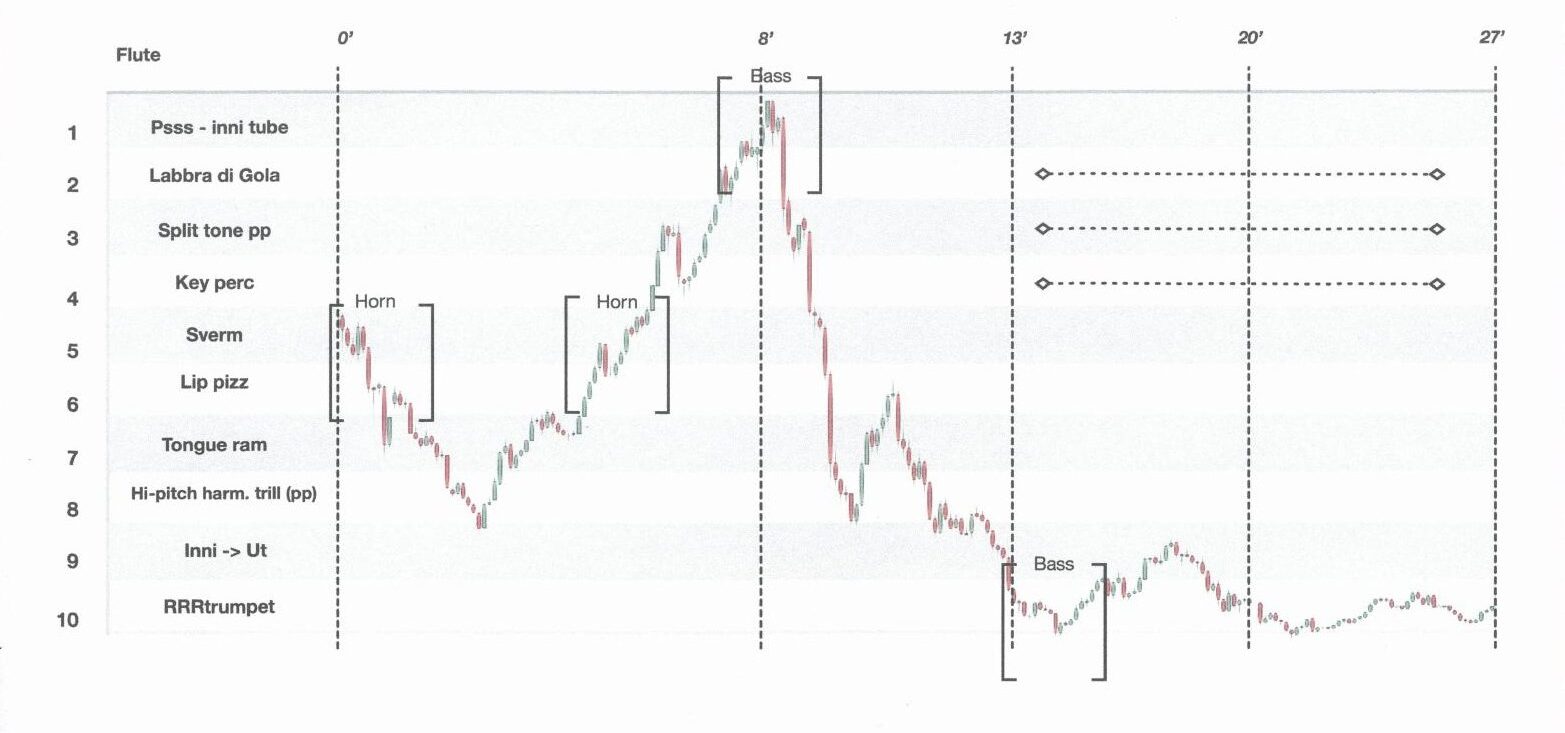
LEMUR’s scores function less as fixed notation and more as system diagrams: documents that coordinate several live processes at once. Mikrophonie‘s 42-minute graphic score lays out playback, inside/outside/room microphones, live mix and diffusion as parallel, simultaneously-running tracks, with mixing-desk moves — panning, EQ, reverb — written as performable parts alongside the instrumental lines. Out of the Dark‘s score works differently, plotting dynamic contours across the full duration of the piece to shape how electronics and room resonance build and recede over time. In both cases the score is doing double duty: guiding the musicians and specifying the behaviour of the electronic system underneath them.
Site and itinerary
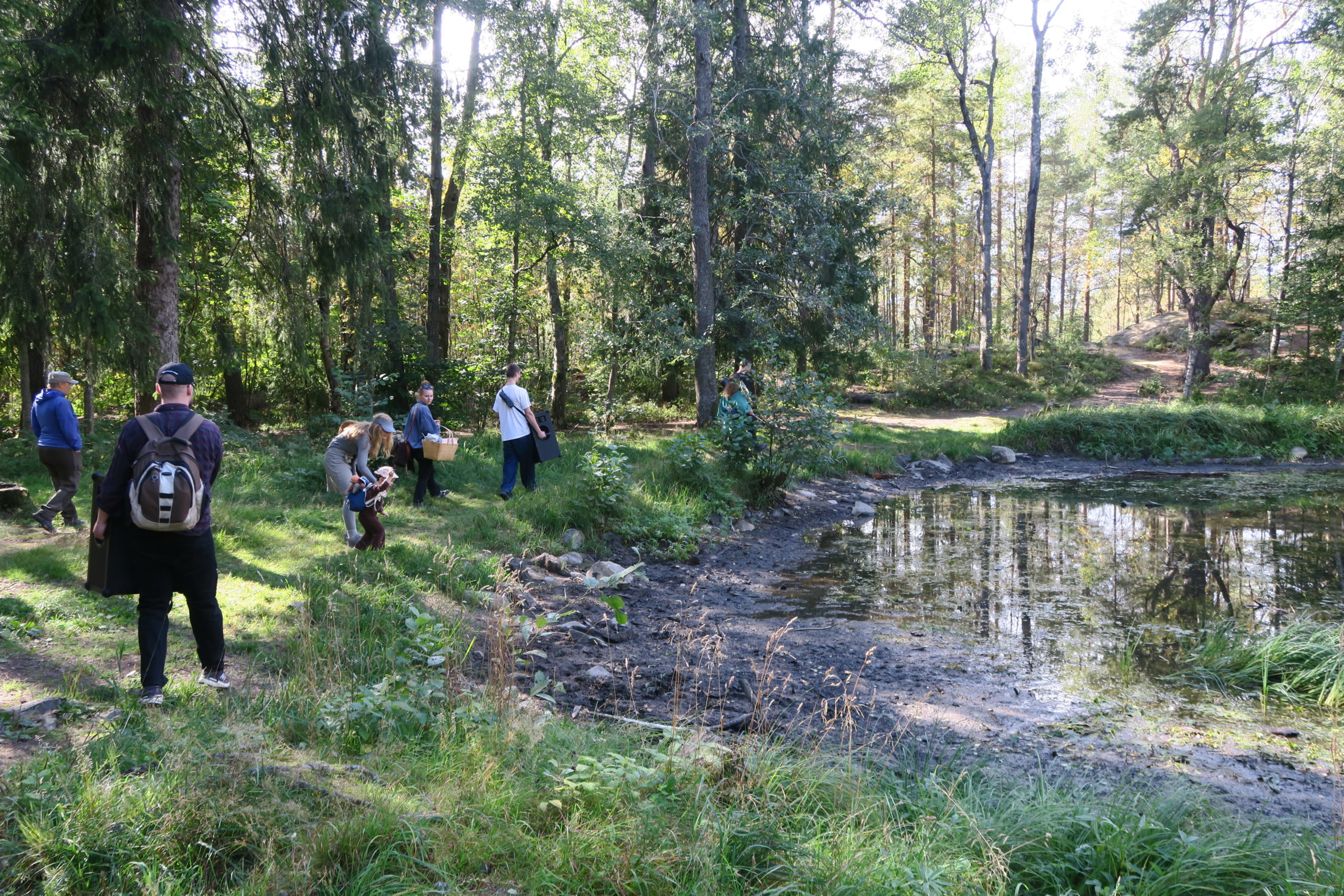
Several of LEMUR’s works are built not around a stage but around routes. Delian modes (2021) takes the form of a forest walk: a mobile audience moves through paths and forrest stretches to find musicians stationed among the trees, each listener balancing new combinations of live playing, nature sounds and electronic worlds. Symphonie magnétophonique (2022), made for Ultima, transposes the walk to the city, unfolding across three movements and three real locations — a transportation hub, a public square and a concert hall. The title nods to musique concrète’s tape machine but inverts its premise: where concrète brought the city into the studio, LEMUR brings the concert into the city, until a final movement gathers what the journey has collected. With Presque rien (2024), the route itself becomes the score, as the piece is built from recordings made along a single trajectory from the highest to the lowest point of the island of Veierland — a slow topographical descent that earns its Ferrari-borrowed title.